McKnight Masterworks · Handmade in small batches
Rings turned from living wood.
Solid wood, stabilized stock and antler rings with hand-poured resin inlays — plus cutting boards, river boards, serving pieces and one-off commissions, every one made to order.
Species on the shelf — hover to preview the timber
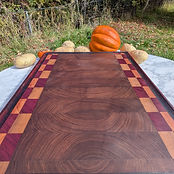
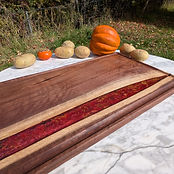
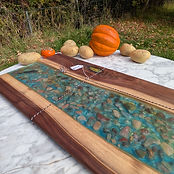
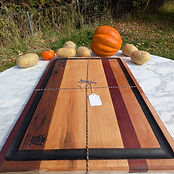
Cutting boards & serving pieces
Boards built for a lifetime of knives.
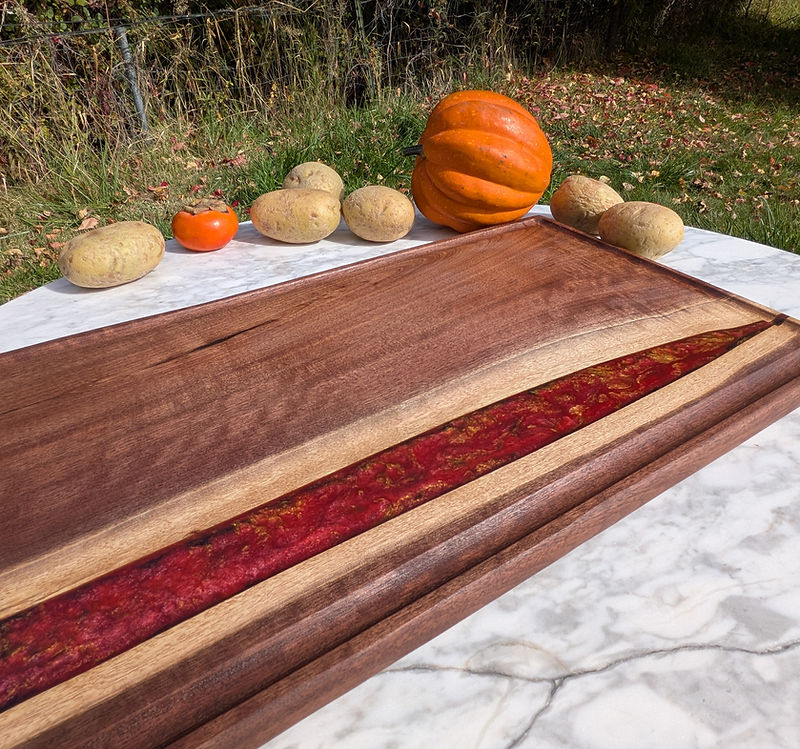
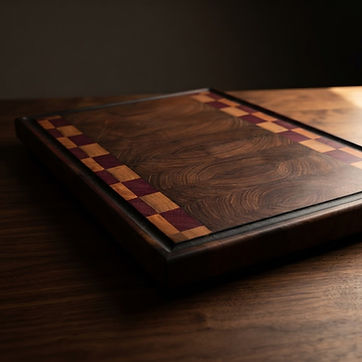
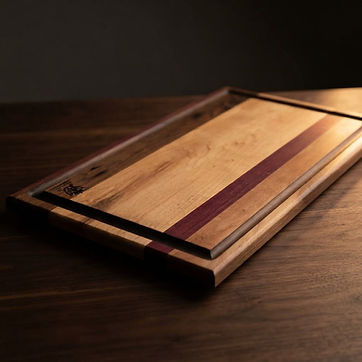
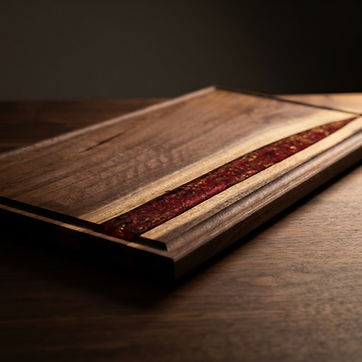
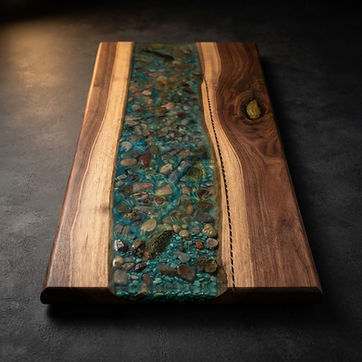
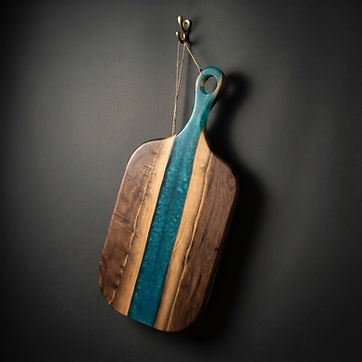
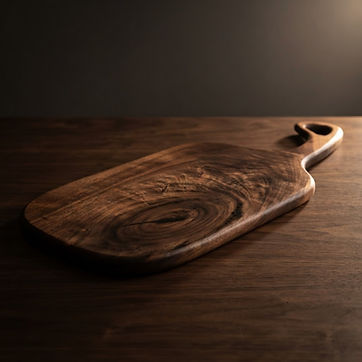
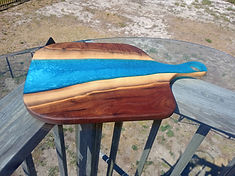
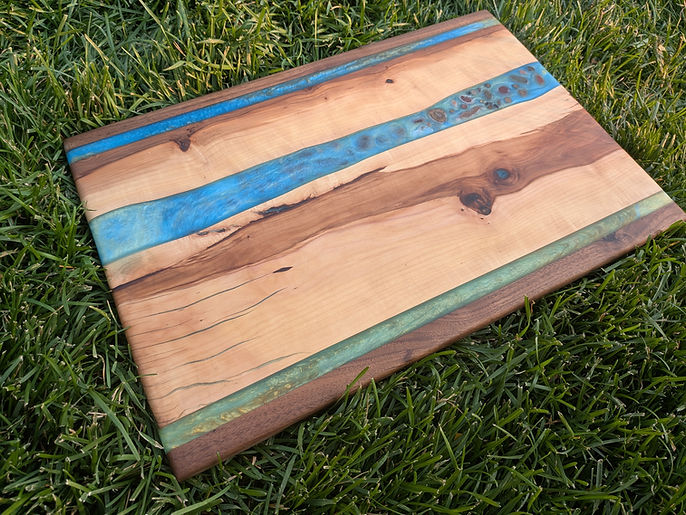
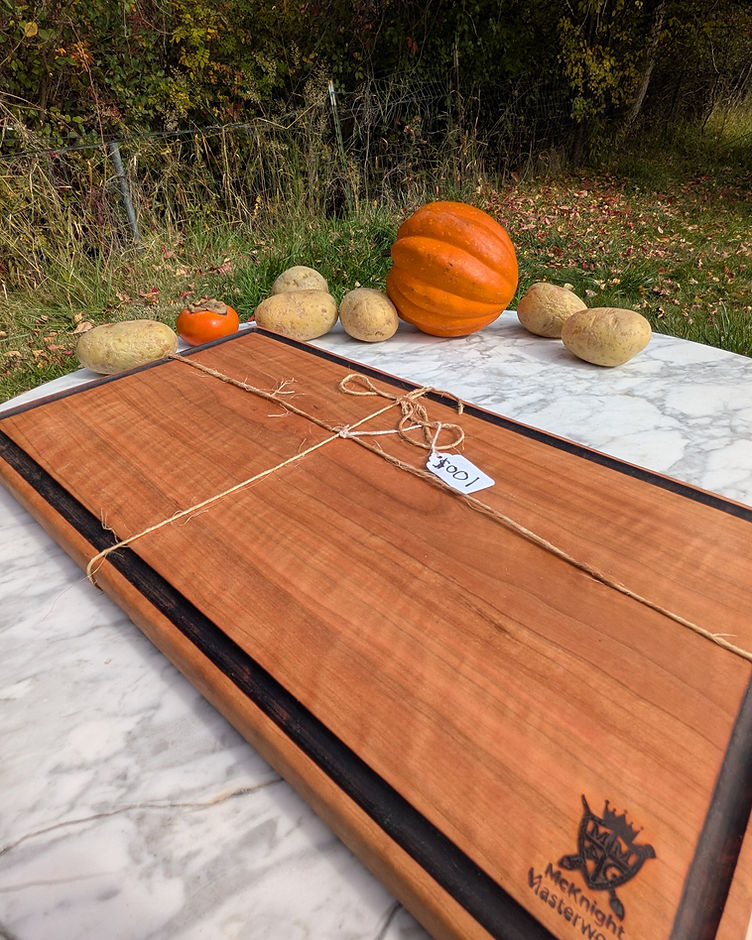
End grain, edge grain and river boards — walnut mostly, with maple and purpleheart worked in. End grain closes back up around the edge instead of dulling it; every board is oiled, waxed and ready to use.


Other work
More of what leaves the shop.
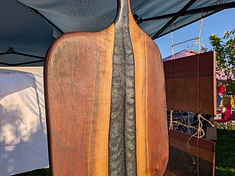
Rings and boards are most of it, but the bench does not stop there. If you have seen something I make and want it in your own size, species or colour, say so — that is the whole point of working this way.



Custom requests
Have something specific in mind? Describe it and I'll tell you how I'd build it.
A board that fits your counter exactly, a ring in a species that means something, a set for a wedding party. The commission desk takes a sketch, a photo, or a sentence — that is enough to start.

Wooden rings · made to order
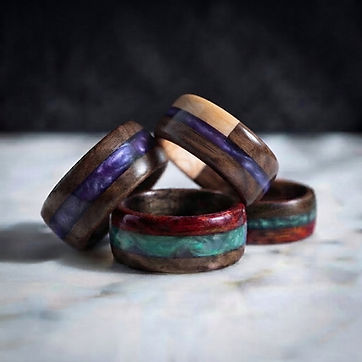
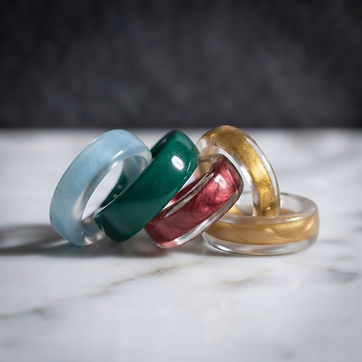
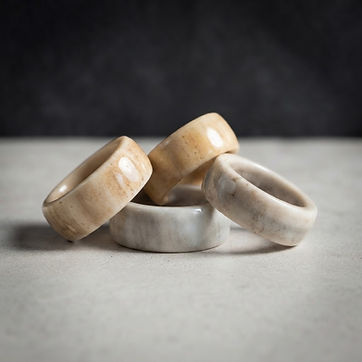
Rings from the lathe.
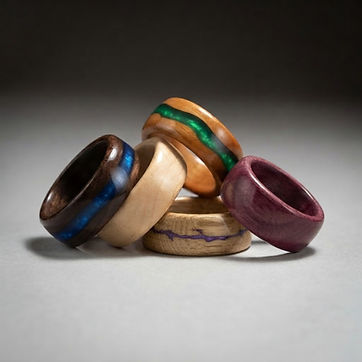
Solid turned, stacked and cast bands in solid wood, stabilized stock, antler and solid epoxy — each one turned, cast and finished by hand after you order it, so no two are identical. Want it different? Every ring here can be rebuilt in the designer.




Why rings, of all things
I started turning wood rings for one selfish reason: I wanted a ring I could wear in the shop. Something that would not catch on a machine, would not scratch a board I had just oiled — and I was never a fan of the silicone bands everybody else wears for a shop-safe, non-conductive ring. So I made one for myself, and one was the whole plan. Then people kept asking me for one, and kept asking, until the smallest thing I build quietly became the main thing I build. The plan had been to start with cutting boards and scale up from there — it turns out the little pieces are what pay the bills.
Rings are also the oldest kind of ring there is. Stone, bone and wood ones are the most common ever made, simply because we were wearing them long before anyone worked out metal — thousands of years before recorded history. A ring has never needed to be precious to mean something.
Materials
Wood is the body. Resin is the light.
A working stock of 15 species — walnut first among them — and resin I pour myself in 14 pigments, including the gold, ember red and moss green the shop is known for. If a species you want is missing, ask; I can usually source it.
Black Walnut
Deep chocolate brown, tight grain, very stable. Domestic — bands start at $40.
Maple
Pale blond, sometimes with soft figure — not every board has it. Domestic — bands start at $40.
Cherry
Warm mid-tone that darkens with age and light. Domestic — bands start at $40.
Bloodwood
Deep oxblood red, dense and fine-grained. Exotic stock — bands start at $50.
Purple Heart
Violet when cut, settling into deep plum. Exotic stock — bands start at $50.
Zebrawood
Bold light-and-dark bands, very graphic. Exotic stock — bands start at $50.
White Oak
Pale gold with a bold ray fleck. Domestic — bands start at $40.
Red Oak
Warm and open-grained, a classic. Domestic — bands start at $40.
Padauk
Vivid orange-red, coarse open grain, dramatic. Exotic stock — bands start at $50.
Mesquite
Golden brown with dramatic, swirling figure. Domestic — bands start at $40.
Bocote
Golden with black spider-webbing. Exotic stock — bands start at $50.
African Blackwood
Jet black, heavy, glassy when polished. Exotic stock — bands start at $50.
Stabilized Maple
Resin-stabilized under vacuum — dense, water-resistant, takes a glass finish.
Stabilized Cherry
Cherry stabilized with resin, colour locked in.
Stabilized Burl
Swirled burl figure locked solid with resin.
Resin pigments
The process
From an idea to a finished band.
No inventory, no production line. Everything here starts when you ask for it and passes through the same pair of hands.
Tell me the piece
Design a ring in the studio, pick something ready to make, or write out the thing that only exists in your head.
I pick the stock
I pull the species and cut them to size, then confirm the layout, inlay and size with you before anything is glued.
Turned, cast, cured
The band is turned on the lathe, the inlay poured and left to cure, then it goes back on the lathe to be trued up.
Finished and sent
Sanded through the grits to 2000, polished, waxed, oiled for boards — then boxed and shipped, usually in 2–4 weeks.

The shop
One pair of hands, one lathe.
I wanted to do this for more than ten years before I actually started. Every time I set what I could make by hand next to what a factory turns out by the thousand, it looked like an impossible dream — I could not see how anybody made a living at it. What I had wrong was the point of it. A custom piece is not in a race with a mass-produced one; it is a different thing altogether. Somebody picked the board, cut it, sanded it through every grit and signed it, and you can feel that the moment you pick it up.
What has really blown me away is the people. I did not expect so many of them to put their money behind a small shop and a local craftsman, or to want something that nobody else on earth has — a piece they can point at and say that one is mine. That is what keeps the lathe running, and it is why I say yes to almost everything that gets asked of me.
Everything comes off the same bench, so nothing is fixed: the species, the width, the resin colour, the size of the board, the engraving. Nothing here is mass-produced, and nothing is wasted — the offcuts become the next small piece.
15
Species on the shelf
14
Resin pigments
2–4 wks
Typical lead time
The portfolio
Every piece is a one-off.
River boards, end grain blocks, paddles and commissions — the ones that have already gone home.